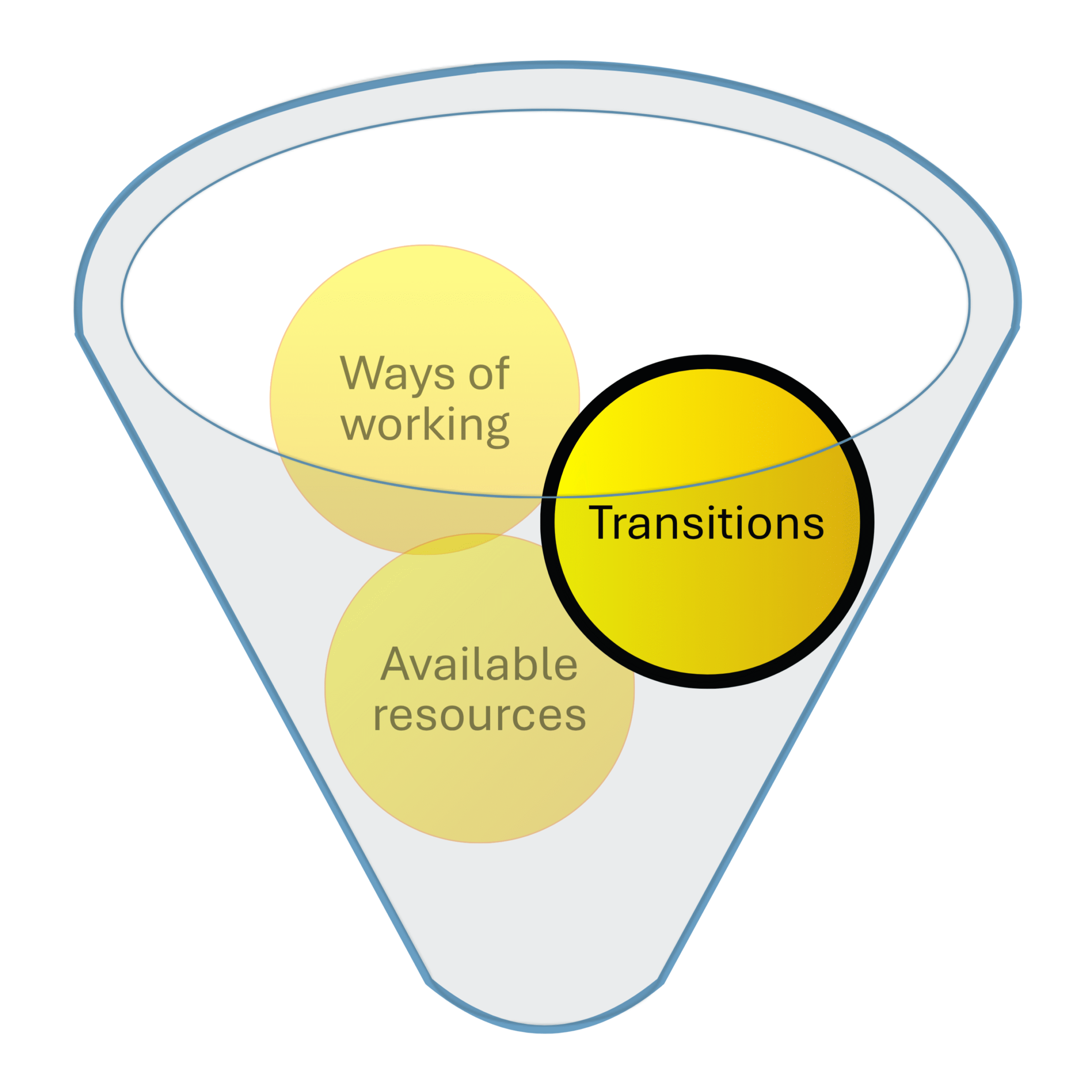
The breakdown of the I-ASC explanatory model shows a range of factors that should be considered in AAC decision making. Transitions encompass future planning for predicted changes for the child or young person as well as ongoing changes in technology.
The elements that make up ‘Transitions’ are explained below – click on each heading to learn more
Please note: In this section, the term “child” is used broadly and may refer to an AAC user of any age. The original study was conducted with children and young people, however we have had considerable feedback that with a little modification of the content provided, there is relevance to individuals across their lifespan. We encourage you to consider minor adaptations to better suit your context.
Future planning
What does this term mean?
This refers to any future planning including expected change, how you intend the future AAC system to look and function, and how the child or young person may be communicating. It also includes changes in the environment or setting such as changes in educational provision or staff providing services.
The findings suggest that expectations about these future changes played an important role in decision-making.
Things to consider
Consider key transition points (such as moving to a new class, school, or college) and make sure that important information about the child or young person’s communication needs, AAC use, and support plans is shared effectively between current and future settings. This helps ensure continuity of support and reduces disruption during periods of change.
Tools and materials
Technology change
What does this term mean?
This refers to how developments in technology can affect current and future AAC decision-making.
This includes a child or young person moving from one AAC system to another as their needs, skills, or circumstances change. It also considers how public awareness and understanding of AAC and assistive technology are evolving over time, which may influence acceptance, access, and opportunities for AAC users. In addition, technology change includes the impact of devices or software becoming outdated, the introduction of new technologies and features, and aspirations for future developments that could better meet communication needs.
The findings suggest that these technological changes can play an important role in planning and decision-making for AAC provision.
Things to consider
Be aware that people may have different expectations of AAC technology based on their knowledge and experience. Discuss options openly to develop a shared understanding of what AAC can offer, including how specialist AAC compares with mainstream technologies.
If decisions are delayed while waiting for newer technology, ensure the child or young person has access to an appropriate AAC system that continues to support their communication and language development.