
Ways of Working
The breakdown of the I-ASC explanatory model shows a range of factors that should be considered in AAC decision making. Ways of working define a range of service structures and team processes that potentially influence the way decisions are made.
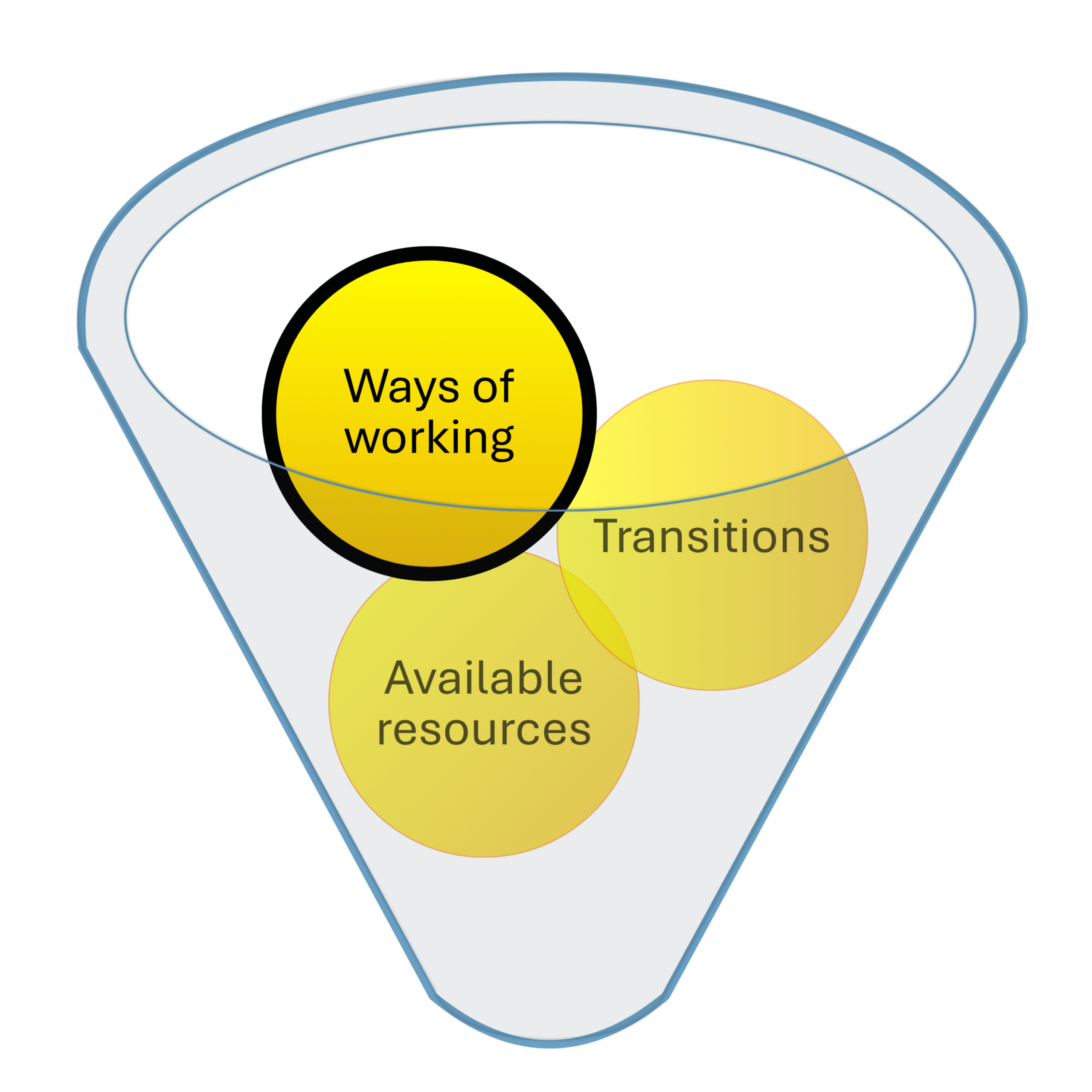
The elements that make up ‘Ways of working’ are explained below
– click on each heading to learn more
Please note: In this section, the term “child” is used broadly and may refer to an AAC user of any age. The original study was conducted with children and young people, however we have had considerable feedback that with a little modification of the content provided, there is relevance to individuals across their lifespan. We encourage you to consider minor adaptations to better suit your context.
Balancing decisions
What does this term mean?
This refers to the process of deciding which elements of an AAC system matter most for an individual child and making any necessary trade‑offs to reach a final choice. The findings show that the choices made are strongly shaped by contextual factors such as service structures, team composition, how support is delivered, and the team’s level of AAC knowledge.
Things to consider
Family needs should be included when making AAC decisions. To help the child learn and build skills, make sure they have access to good‑quality communication opportunities. If a decision is made to choose an AAC system that is easier for adults to support even if another system would suit the child better, everyone involved should clearly understand why that compromise was made.
Plan ahead for changes in staff or in the child’s circumstances so there is always someone who can maintain the system, update it, and model AAC language. It’s also important to be clear about why the child has been referred for AAC support. For example, updating an old system requires a different assessment process than supporting a child who is new to AAC.
Tools and materials
Basis for the referral
What does this term mean?
This refers to why a child is being referred for an AAC assessment and how that referral information shapes the decisions made during the recommendation process.
Things to consider
It is important to understand why a child is being referred for AAC support before planning the assessment. Different reasons for referral (such as updating an old system or assessing a child who is new to AAC) require different approaches. Make sure all relevant information is included in the referral so the assessment can be planned properly.
If specialised AAC services require children to show certain skills before they can access support, there must be alternative pathways to help children build those skills when they don’t yet meet the criteria.
Tools and materials
Extraneous factors
What does this term mean?
Some decisions are shaped by factors outside the assessment itself. These can include how easy it is to access services, how aware people are of their rights, or unexpected events that happen by chance. The findings show that these outside influences often unpredictable or unrelated can still affect the AAC decision‑making process.
Things to consider
Be clear about how outside factors may influence AAC decisions. For example, a child’s school placement or the service delivery model can shape what is recommended. When these factors have too much influence, look for ways to reduce their impact. If distance makes it hard for a child to reach an assessment centre, consider telehealth options to ensure fair access.
Be aware when limited resources are shaping the decisions made and where possible adjust the recommendation process so it better reflects what the child needs, rather than what the service currently has available.
Tools and materials
How decisions are made
What does this term mean?
This describes how decisions are made and considers the processes used to make decisions within the AAC system recommendation. Findings suggest that the way services are organised and the work methods used may have a considerable impact on recommendation processes.
Things to consider
Be careful not to make AAC recommendations without the essential information you need, especially a clear picture of the child’s language and communication skills.
Be open about how decisions are made. When everyone understands the reasoning including the child and family, it supports better teamwork and shared decision‑making. Communication aid trial plans should always be based on a solid, evidence‑based rationale.
Tools and materials
Information brokering
What does this term mean?
This refers to how information is shared between the different people and services involved in AAC decision‑making. The findings show that barriers between sectors such as health and education can make it difficult to access all the information needed. When this happens, decisions often have to be made using only the information that is available, rather than the information that would ideally be gathered, which can affect the final outcome.
Things to consider
Avoid information gaps during AAC assessment by working creatively and collaboratively. When gaps cannot be avoided, clearly record them so everyone understands the limits of the information being used.
If different services or professional groups share responsibility for assessment and gathering information, develop strong collaborative practices to ensure information flows smoothly and supports good decision‑making.
Tools and materials
Inheriting decisions
What does this term mean?
This describes how earlier decisions can shape later ones. The findings show that the first communication aid chosen often influences what is recommended next. Because of this, early decisions need extra care, as they can affect the child’s future AAC options.
Things to consider
Inherited decisions can have both positive and negative effects. The positives include building on the learning already invested in a particular communication method. The negatives include limiting the language development options that might better suit the child or young person.
When making AAC recommendations, try to keep the child’s and family’s existing learning and familiarity with their current symbols or communication methods. Only recommend a change when there is a strong reason to do so.
Tools and materials
Policy
What does this term mean?
This refers to any policies that influence access to AAC service support and funding. The findings suggest considerable variability in local interpretation of national policy and guidance.
Things to consider
- Clicky link to Policy and legislation page to be inserted
Tools and materials
- Insert RCSLT AAC Guidelines
Roles and responsibilities
What does this term mean?
This refers to understanding who is responsible for each part of the communication aid recommendation process. The findings suggest that roles are not always clearly defined, which can lead to confusion, disagreements, or unrealistic expectations between team members.
Things to consider
- Everyone involved needs a shared understanding of their roles and responsibilities, including families. Clear role clarity is essential for effective AAC decision‑making and helps ensure that each person contributes meaningfully to the process.
Be ready to problem‑solve when barriers to teamwork or information gaps arise. Strengthening collaboration helps maintain a child‑centred process. When team members cannot meet in person to make decisions, creative solutions such as virtual platforms can support effective joint working.
Tools and materials
Service delivery model
What does this term mean?
This looks at how a service is organised and delivered, and how that affects the resources and support available to a child. It includes things like the service delivery model, how teams are set up, and how communication aids are recommended. AAC services can be organised in many different ways, and the findings show that these different models can strongly influence the recommendation process.
Things to consider
- Be mindful about where AAC recommendations are made. Whenever possible, carry out parts of the process in the child’s everyday settings, where they naturally communicate.
Be ready to problem‑solve when barriers to teamwork or information gaps arise. Strengthening collaboration helps maintain a child‑centred process. When team members cannot meet in person to make decisions, creative solutions such as virtual platforms can support effective joint working.
Keep the available timeframe in mind. This may be prescribed by the service delivery model (e.g. a set number of appointments). Shorter timeframes may warrant more comprehensive information gathering processes in advance of any decision making appointment.
- Communication system trials strongly shape final decisions. Make sure trials are properly planned, well supported, and long enough for the child to engage fully. This gives the best possible information to guide the final recommendation
Tools and materials
Team theory
What does this term mean?
This looks at the AAC theories that may shape how decisions are made. The findings show that many people rely on implicit frameworks ideas and models they have learned over time even if they are not stated openly. These frameworks come from AAC and assistive‑technology models, education and training, and the person’s own experience.
Things to consider
- Teamwork improves when everyone shares an understanding of the models, ideas, and philosophies that guide their decision-making. Having time to work together, build relationships, and develop positive team dynamics also strengthens role clarity and supports better collaboration.
Be aware that people often use implicit frameworks ideas they rely on without stating them to help manage the many competing factors involved in AAC decisions. While these can be helpful, they may also unintentionally exclude others from the process. Explaining the steps in the decision‑making process in a clear and straightforward way helps everyone join the discussion and take part meaningfully.