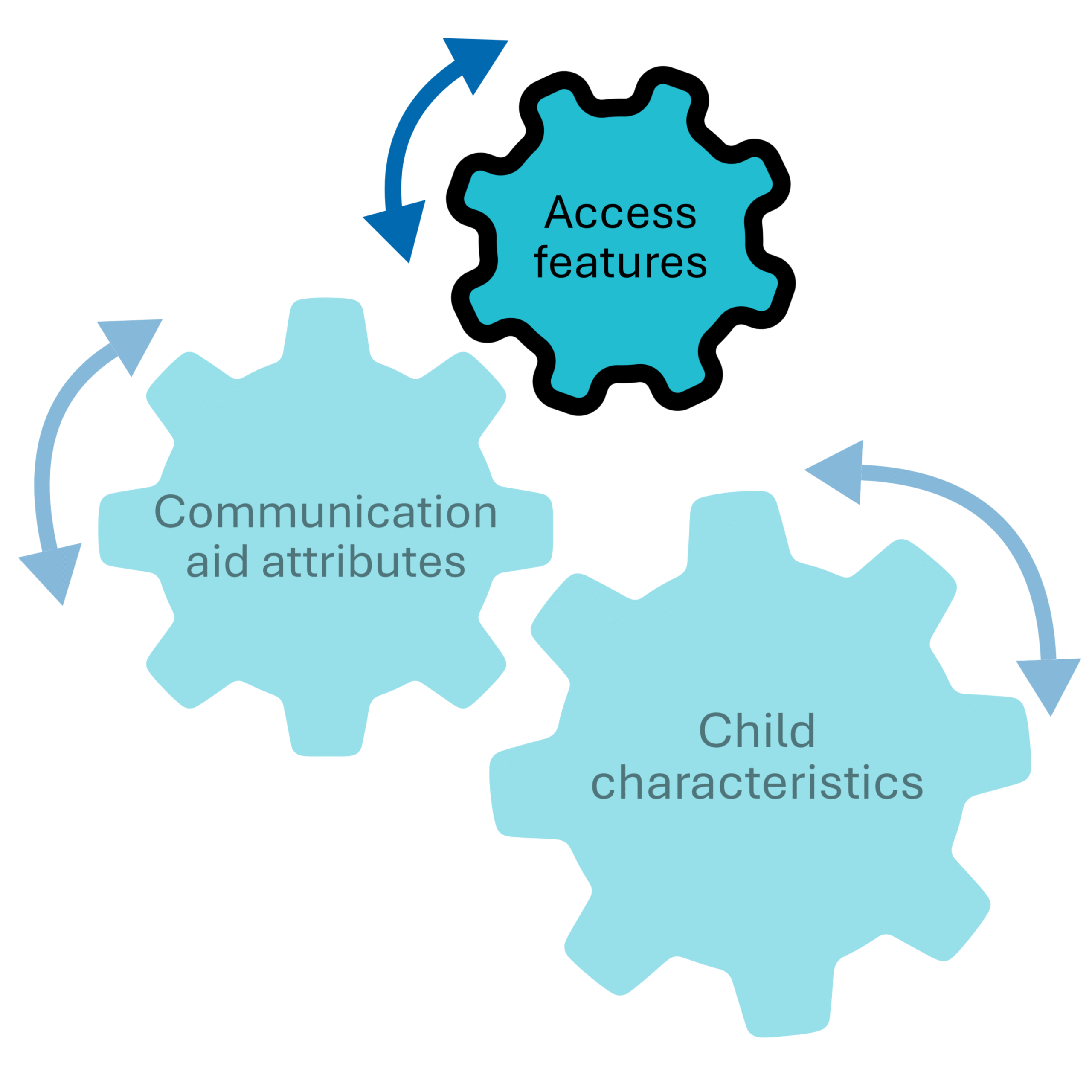
The breakdown of the I-ASC explanatory model shows a range of factors that should be considered in AAC decision making. Access features include the child’s access method as well as mounting and positioning factors.
The elements that make up ‘Access features’ are explained below – click on each heading to learn more
Please note: In this section, the term “child” is used broadly and may refer to an AAC user of any age. The original study was conducted with children and young people, however we have had considerable feedback that with a little modification of the content provided, there is relevance to individuals across their lifespan. We encourage you to consider minor adaptations to better suit your context.
Access method
What does this term mean?
This refers to the ways a child or young person selects items within an AAC system to communicate, such as direct touch, eye gaze, switches, head pointing, or partner-assisted scanning. The findings suggest that identifying an effective access method is often the first and most important consideration when selecting an AAC system. In some cases, the access method can limit the amount or organisation of vocabulary that can be made available.
Things to consider
When making decisions about access, aim to optimise both the child’s ability to access the system efficiently and their access to a rich and meaningful vocabulary. The selected access method should support current communication needs while also allowing for future development wherever possible.
Regular review is important, as changes in physical, sensory, cognitive, or communication abilities may create opportunities to use different access methods or increase access to vocabulary over time.
When considering access methods, it is important to plan how the child or young person will communicate in the short term while they develop the skills needed for their longer-term access method. Opportunities should be provided for the individual to learn and practise using their chosen access method, with appropriate support and training.
At the same time, ensure that the child or young person continues to have regular opportunities to communicate using approaches with lower access demands. This can help maintain motivation, reduce frustration, and support ongoing language and communication development while access skills are emerging.
Where trade-offs are required between the access method and vocabulary organisation, these should be carefully considered. If the demands of an access method limit the amount of vocabulary available on the AAC system, efforts should be made to provide access to additional vocabulary through alternative means where possible. The overall aim should be to maximise both successful access and meaningful communication opportunities.
This refers to how an AAC system is physically set up and made available for use throughout the day. This includes the positioning of the communication aid, the use of mounting systems, and how the AAC device works alongside other equipment such as wheelchairs, seating systems, desks, or access technology.
The findings suggest that a child or young person’s physical abilities, posture, movement, and access needs should be carefully considered when selecting positioning and mounting solutions.
Things to consider
Support for stable head, neck, trunk arm and hand function enables effective and accessible AAC use. Input from physiotherapists, occupational therapists, or other relevant professionals may be needed to ensure that posture and positioning enable successful communication.
Wheelchair mounting can play an important role in making sure a communication aid is consistently available across different environments and activities. The position of the device should allow easy access while also supporting comfort, safety, participation, and independence.
Where decisions involve trade-offs between factors such as device size, weight, portability, and mounting requirements, it is important to consider the impact on communication access. If mounting constraints limit the use of a particular device, alternative AAC options should remain available to ensure the child or young person can continue to communicate effectively across settings.