
Available Resources
The breakdown of the I-ASC explanatory model shows a range of factors that should be considered in AAC decision making. Available resources include comment on other influencing factors summarised as attitudinal support, financial resources, intervention input, general practical support, team-around-the child knowledge and skills, and on-going training available to support the aid recommendation.
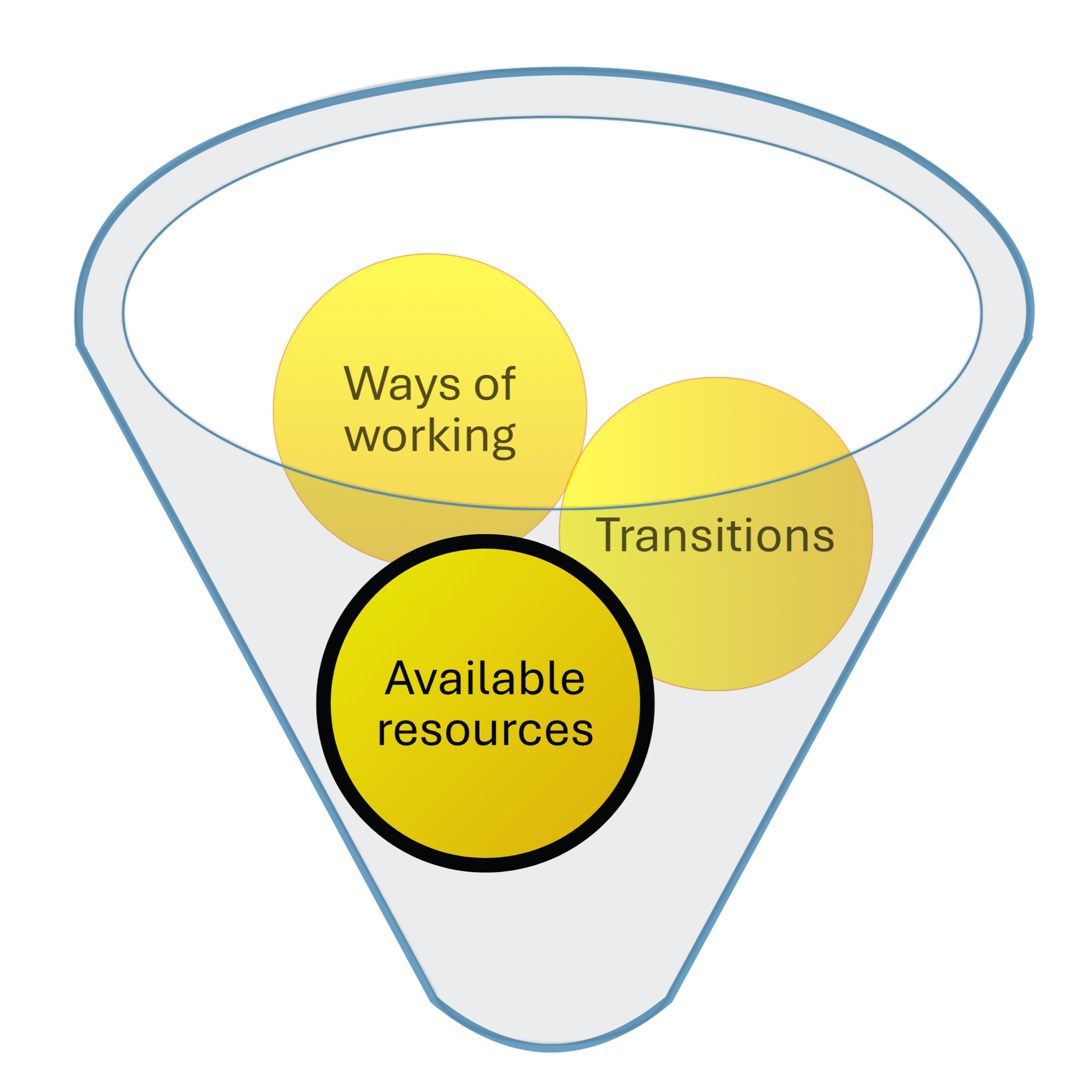
The elements that make up ‘Available resources’ are explained below – click on each heading to learn more
Please note: In this section, the term “child” is used broadly and may refer to an AAC user of any age. The original study was conducted with children and young people, however we have had considerable feedback that with a little modification of the content provided, there is relevance to individuals across their lifespan. We encourage you to consider minor adaptations to better suit your context.
Attitude
What does this term mean?
This describes any attitudinal influence on the child/young person’s AAC journey. Findings suggests that teams make decisions influence by their own beliefs, attitudes and expectations.
Things to consider
Be aware that attitudes can have a considerable influence on decision making and implementation.
Positive attitudes can encourage engagement, problem-solving, and consistent use of AAC. It can be helpful to identify and involve individuals who have positive views about AAC, as they can play an important role in supporting and promoting implementation across settings.
Where negative attitudes, concerns, or unrealistic expectations are identified, these should be explored through open and honest discussion. For example, some people may underestimate the potential benefits of AAC, while others may have unrealistic expectations about what technology can achieve for a child or young person. Understanding these perspectives can help the team develop shared and realistic goals.
Supporting positive attitudinal change may require a range of approaches, including listening to concerns, providing education and training, clarifying roles and responsibilities, allowing additional time for decision-making, and agreeing how and when AAC will be used across different environments. Developing a shared understanding of the purpose and role of AAC can help build confidence, promote collaboration, and support successful communication outcomes.
Tools and materials
Cost
What does this term mean?
This refers to the costs associated with providing and maintaining an AAC system, including the communication aid itself, software, accessories, training, repairs, and ongoing support. The findings suggest that financial considerations can influence AAC decision-making. When service models provide clear routes to funding and equipment provision, cost becomes less prominent, and decisions are more likely to focus on meeting the communication needs of the child or young person in line with a rights-based philosophy of service provision.
Things to consider
Where funding is available, value for money should be considered through the provision of the most appropriate but cost-effective AAC solution for individuals. Discuss any financial implications openly with families and the wider team so that expectations and responsibilities are clear.
Costs related to the teaching and learning support and the aid maintenance support should be estimated and included in any decision recommendation.
Where funding is more variable, there is a need to advocate to service commissioners and service providers to ensure clinical need determines system choices rather than the economic cost.
Tools and materials
Intervention
What does this term mean?
This refers to all of the activities, people, resources, and services required to implement and maintain an AAC system after it has been recommended. This includes considering who will provide support, what support will be needed, where it will take place, and how it will be delivered.
The findings suggest that the level and type of intervention support available to a child or young person can influence AAC decision-making. All AAC systems should be viewed as an investment in the child or young person’s future communication, participation, independence, and life opportunities. However, it is important to consider the intervention demands associated with each option for both the individual and those supporting them
Things to consider
When planning AAC provision:
Consider the level of support required to introduce, teach, and maintain the system over time.
Identify who will be responsible for different aspects of implementation, including modelling, vocabulary development, customisation, troubleshooting, and monitoring progress.
Ensure that families, education staff, and other key communication partners have access to appropriate training and support.
Be realistic about the time, knowledge, and resources available within the child’s support network.
Consider whether the recommended AAC system can be effectively supported across all relevant environments.
Develop a clear implementation plan, including goals, responsibilities, review arrangements, and ongoing support needs.
Team “buy-in” is critical for implementation. Ensure the recommendation process incorporates building consensus and a shared view of the child’s long-term developmental pathway.
Tools and materials
Support
What does this term mean?
This refers to the assistance needed to successfully introduce and maintain an AAC system once it has been recommended. This includes activities such as language modelling and scaffolding, system customisation and personalisation, vocabulary development, and supporting communication partners to use AAC effectively.
The findings suggest that the support available to the child or young person can influence the choice of communication aid.
Things to consider
When considering implementation support:
Assess the level of support available from family members, education staff, therapists, and other key communication partners.
Consider the amount of language modelling and scaffolding that will be needed to support AAC learning and use.
Take into account any customisation and personalisation requirements, such as adding vocabulary, adapting layouts, or creating personalised content.
Provide training and ongoing support for those who will be helping the child or young person use AAC in everyday situations.
Develop an implementation plan that is realistic and sustainable within the resources available.
The aim is to recommend an AAC system that not only meets the child or young person’s communication needs but can also be effectively supported and embedded across their daily environments.
Tools and materials
Team knowledge and skills
What does this term mean?
This refers to the ability of everyone involved in supporting the child or young person to understand, implement, and develop AAC use. This includes family members, education staff, therapists, support workers, and other professionals. Areas to consider include AAC knowledge, confidence in using AAC, previous experience, familiarity with different systems, training received, and ongoing professional development needs.
The findings suggest that the knowledge, skills, and confidence of the team around the child can influence communication aid recommendations. In some cases, familiarity with a particular AAC approach or system may affect decision-making, while gaps in knowledge or confidence may create barriers to implementation.
Things to consider
Be aware that pre-existing familiarity and confidence with particular systems may bias decision making towards those systems. Reflect on whether the familiarity/confidence is a justifiable reason in each instance.
When making recommendations, it is important to consider the long-term implications of early AAC choices. For example, selecting a particular graphic symbol system may influence future learning and vocabulary development. Where possible, decisions should support continuity and minimise unnecessary changes that could require the child or young person to relearn symbols, language structures, or navigation strategies.
Teams should also discuss expectations openly and address any misconceptions about AAC. Media portrayals of communication technology can sometimes create unrealistic expectations regarding the speed, ease, or outcomes of AAC use. Providing accurate information about the learning process, the support required, and what AAC can realistically achieve can help establish shared expectations and support successful implementation.
Tools and materials
Training
What does this term mean?
This refers to the development of communication partner knowledge and skill. Findings suggest that the opportunity to provide and receive child specific AAC training varies.
The findings suggest that opportunities to provide and receive child-specific AAC training vary across services and settings. As a result, the knowledge and skills of communication partners may differ considerably, which can affect the successful implementation and long-term use of AAC.
Things to consider
The aim of training is to develop a confident and skilled network of communication partners who can consistently support AAC use and help the child or young person achieve their communication potential.
As all AAC intervention place high demands on the child/young person, family and support team, aim to include training as part of a communication aid purchase and set-up plan.
Consider if training supports can be accessed through commercial suppliers and specialized service providers. Include these components in your recommendation plan.
Assess the training needs of all key communication partners involved in supporting the child or young person.
Provide training that is tailored to the individual’s AAC system, communication goals, and everyday environments.
Recognise that one-off training is unlikely to be sufficient; ongoing coaching, practice, and review are often needed to develop confidence and competence.
Ensure communication partners understand the importance of modelling AAC and creating regular opportunities for communication throughout the day.
Plan for training needs during transitions, such as changes in staff, classes, schools, or services.
Consider how knowledge and skills will be maintained and shared within the wider team over time.