
I-ASC Explanatory Model of AAC decision making
The I-ASC explanatory model of things to consider when making symbol communication aid recommendations for children.
Since the original release of this research and website, we have had considerable feedback that although originally developed with a focus on children and young people, with a little modification of the content provided, there is relevance to individuals across their lifespan. We encourage you to consider minor adaptations to better suit your context.
Overview
The findings from the I‑ASC study show that recommending communication aids is a complex and highly individual process.
This UK-evidence based investigation revealed that competing yet interconnected elements, such as the characteristics of the child, access features, and aid attributes, require consideration when identifying the most appropriate aid for each child. The I-ASC evidence also suggests that these decisions are influenced by cultural work practices, the contexts of service provision and the communication environments surrounding the child.
To illustrate this complex and dynamic interplay of competing considerations and influencers, an I-ASC Explanatory Model was developed from the research findings (shown below).
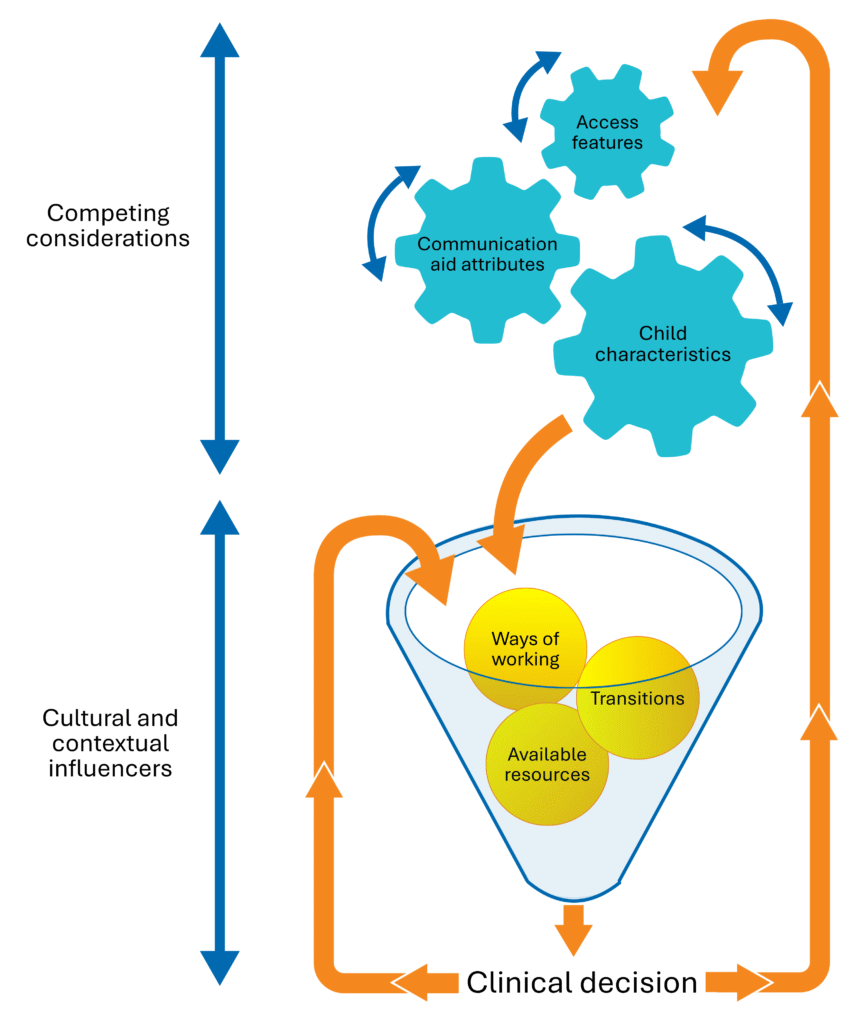
The I-ASC model is explained briefly in the drop-down sections below:
How to use I-ASC in your decision making
We encourage you to consider the detail of the I-ASC explanatory model to support your AAC decision making. The I-ASC Model can help you to review each component individually, as well as how they may interact when working towards a shared communication aid recommendation.
The different parts of the model (‘cogs’ and ‘bubbles’) are presented in further detail on their own pages, which you can access using the buttons below. Each page offers specific things for you to think about when considering that element. These are not presented in any order of priority, as prioritises will vary for each child being considered for a symbol communication aid recommendation.
You are not expected to work through every element of the model. Identify which elements seem most relevant to your child or young person and start reading the detail provided under those headings. Later you may choose to look at other aspects of the model.
Tools and Materials to support AAC decision making
A collection of ASC for AAC tools and materials has been developed to support your AAC decision making. These resources may help with your problem solving and decision deliberations as you apply the I-ASC explanatory model.